
Fabrication guidelines
In most cases SLIPNOT is treated like standard metal. SLIPNOT does not recommend fabricating after galvanizing.
SLIPNOT can be drilled and countersunk in most situations, but pre-drilling is recommended. Pre-drilled holes, countersinks and counterbores are protected from the process, so screws and bolts sit flush. Drilling afterward adds time and tooling cost.
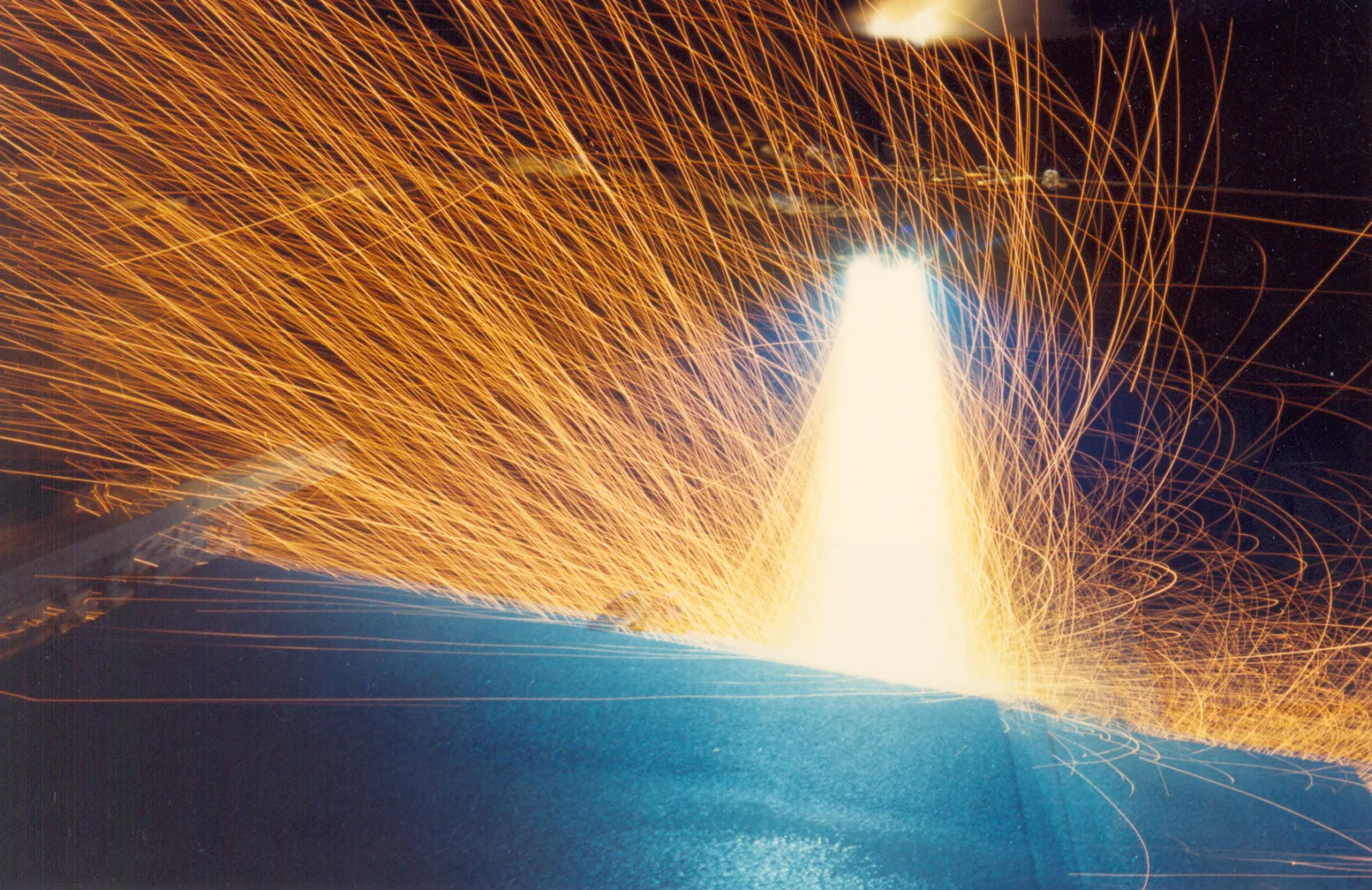
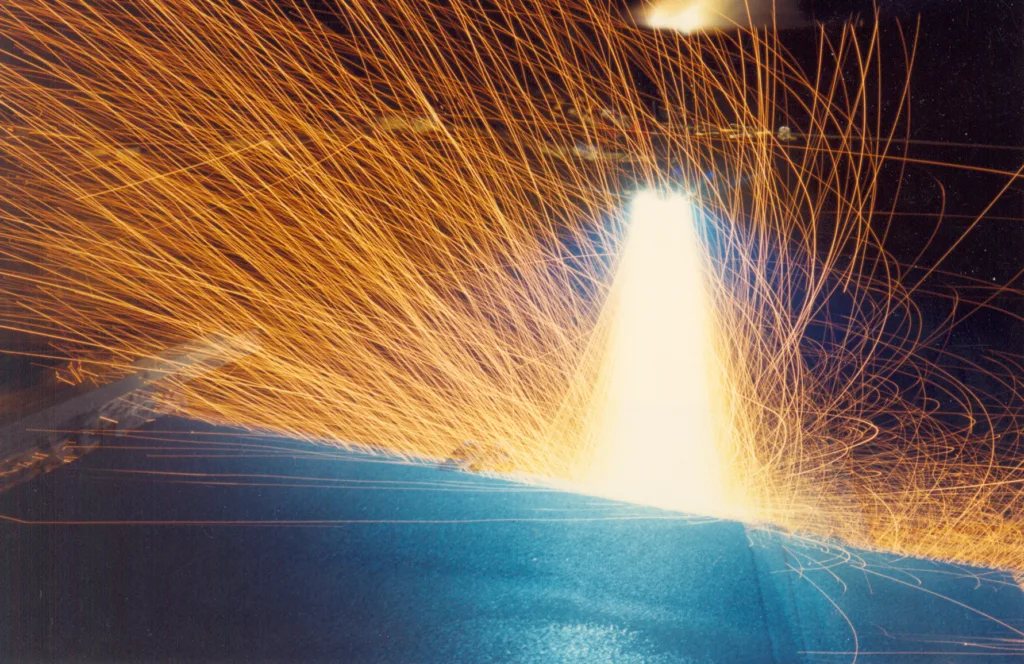
Cutting with flame or plasma is no different than with smooth plate, and it is the preferred way to cut SLIPNOT. The surface will not flake or delaminate along burn lines.
The surface adds about 0.020" to 0.030" to the substrate and will not harm laser optics, so SLIPNOT is usually cut exactly like untreated material.
Plates can usually be sheared, but the hardened surface dulls blades quickly and can scratch shear tables. Shear from the non-slip side, or cut by flame, plasma, laser or water-jet instead.
SLIPNOT is all metal and grit free, so welding is generally the same as for untreated material. Heat distortion and discoloration show through the surface; pre-weld mounting angles to use as weld points where looks matter. Do not weld galvanized products.
Air-bend with standard practice for the substrate. Tighter radii raise the risk of cracking or delamination. Protect non-steel surfaces from steel tooling, or rust lines appear later; formed aluminum shows a bare line at each die contact point.
Areas can be masked from the surface: on stair treads only the tread itself is surfaced, and logos, words, patterns or small weld borders can be left bare. Detailing can add cost.