
The Biggest Preventable Problem Facing Industry
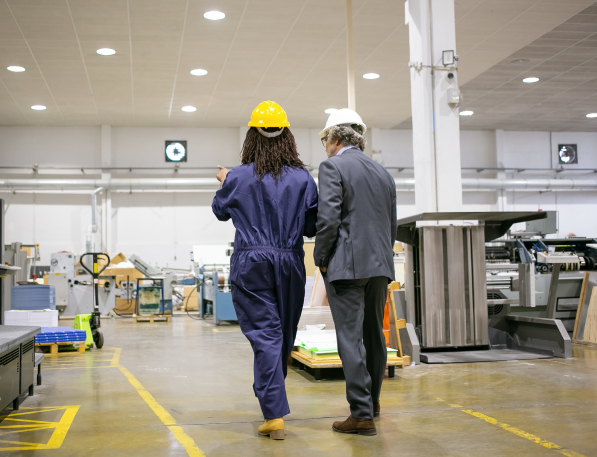
The title of this paper is somewhat misleading. Slip, trip, and fall events are certainly frequent. Based on data from the Bureau of Labor Statistics (BLS), if you are an automotive manufacturer with about 50,000 employees, you can expect about 450 slip, trip, and fall (STF) events every year. A large food processing company with a similarly sized workforce can expect the same amount of these accidents on average. In all, the Occupational, Safety, and Health Administration (OSHA) records over 200,000 workplace injuries that are a result of STFs annually, making slips, trips, and falls the third leading cause of workplace accidents. The estimated associated cost of these events amounts to over $70 billion each year. And the biggest tragedy is that each year around 800 people will wake up, go to work, and never return, becoming a fatal victim of a slip and fall event. The unfortunate part of all these statistics is that these hundreds of thousands of accidents, billions of dollars needlessly spent, and over 800 lives lost are completely unnecessary since slip, trip, and fall events are nearly 100% preventable.
Forgotten may not be the most accurate part of the title, however. Anyone who has ever been injured in an STF event is unlikely to have forgotten it. But in most cases, the costs associated with these events are often hidden and dispersed throughout many different departments within a company, masking their true impact on a business’s performance. Perhaps Frequent and Hidden is a better description of STF events and their effects on the workplace.
OSHA and BLS publish the average direct cost of a recordable workplace event at $41.353. Slip and fall events, in particular, have a higher average cost with a value of $48,575 for each occurrence. These direct costs include things like medical expenses, lost-time wages, and other associated charges. A company’s insurance and risk management carriers will cover nearly all these direct expenses. Each recordable workplace event has accompanying indirect costs which exceed the direct costs of the incident. For slips and falls, these indirect costs average approximately $51,000 per event. These costs include lost productivity, accident investigations and regulatory reporting, replacement worker training, facility or equipment damage, overtime wages, higher insurance premiums, and other such expenses. These indirect costs are always paid for by employers which results in significant reduction to their bottom lines. Since these costs are dispersed throughout many different areas within a company, their full impact on a company’s overall profits are not always obvious.
For example, in the Automotive Manufacturer or Food Processor above, likely self-insured with this number of employees, these companies bear the entire cost of workplace accidents, both the direct and indirect. For STF events, this total cost averages $100,000 per event or a total of $45 million or more of lost profits year after year. As noted previously, these dollars are needlessly squandered since slip, trip, and fall problems have engineered solutions available to prevent these events before they can occur. For smaller companies, the indirect costs of STF events alone, which companies always fully bear, can seriously impact or eliminate any profits these firms generate. Much like a gas station with a leaky holding tank, failing to solve the root causes of STF events is the same as simply pouring money into the ground.
As noted earlier, many engineered solutions exist to solve the problem of workplace STFs and plug the profit leaks associated with STF costs. A study conducted by the National Floor Safety Institute, NSFI, found a dozen or so major factors contributing to STF events. Things like illumination, signage, types of footwear, maintenance, surface contaminants, and others all contribute to a slip or trip. What this study found was that over half, 55%, of all STF events were directly related to the walkway or working surface. Thought of in another way, that is 110,000 of the 200,000 STF recordables each year are designed to happen from the start. Choosing the right types of walking and working surfaces is critical to having a safe and productive working environment.
A slip event takes place when the required friction of a step, FR, exceeds the available friction of the walking surface, FA. The required friction, FR, will differ with each person and even with each step. Many things determine what this required friction amount is. The type of footwear worn, a person’s age, weight, gait, and physical condition all go into determining the FR value for a step. Studies found that for every decade a person ages, both the frequency of and severity of resulting injuries increase in slip and fall. With an aging workforce, this makes the need for higher safety imperative.
All materials have an inherent available friction value, FA. The condition of that surface, whether dry or contaminated with water or oil for example, will greatly affect the surface friction available (FA) and may drastically alter the slip and fall risks. For example, outdoor walkways need to have sufficient friction in rainy conditions and not simply dry ones to insure slip-free passage since they are often subject this type of environment. Work platforms exposed to oil or lubricants must provide adequate surface friction even if submerged in these slippery fluids to provide safe steps for the workers operating on them. The key to designing a safe and productive walking/working surface is choosing the correct material which provides the maximum amount of surface friction available for conditions they may conceivably experience.
Since available surface friction decreases with wear, monitoring these surfaces is the other critical step in maintaining maximum safety and elimination of STF events. The measurement unit used in determining safe versus unsafe walking surfaces is most often the coefficient of friction (COF) value of the material’s surface. The coefficient of friction of a surface is calculated from determining the force required to move an object at rest divided by the mass of the object. If you have a ten kilogram weight that requires five kilograms to start this weight into motion, dividing 5 by 10 give a COF value of 0.5. Since the starting weight is at rest in this measurement, this is known as the static coefficient of friction or SCOF.
Since by definition walking is not a static process, many contend that measuring dynamic coefficient of friction, or DCOF, is a better way to determine a walkway or working surface safety. DCOF is also a ratio of forces but in this case it is taking the resistive force exerted on a weight in motion divided by that weight. As in example above, if a 10 kilogram moving weight experiences 5 kilograms of resisting force, it is determined to have a DCOF value of 0.5. There are other ways of comparing the safety of different surfaces but SCOF an DCOF are the most widely used within the United States, which we will concentrate on in this paper.
Devices called tribometers measure SCOF and DCOF values. This equipment is used both in laboratory and field settings. Over the years, the quality of and the repeatability of results generated by modern tribometers has greatly increased. The ease of use of many types of these units has also significantly increased over this period. Monitoring floor safety with these units can be contracted to specialist companies providing these services or now can be easily included as part of a company’s maintenance program with minimal staff training. Tribometers are a critical part of a successful floor safety monitoring program to maximize employee safety. With the high costs of STF events, these monitoring programs more than pay for themselves in short order.
The question now becomes “what is safe?” Debate continues as what the definitive answer to that question should be. The OSHA’s General Duty Clause 5 (a)(1) of the Occupational Safety and Health Act requires “employers to provide a workplace that is free from recognized hazards that could cause death or serious physical harm to employees.” OSHA recommends a minimum COF value for walking and working surfaces of 0.5 but does not specify if this is an SCOF or DCOF value. ANSI (American National Standards Institute) and the National Floor Safety Institute (NFSI) determined that flooring surfaces which maintain a SCOF value of 0.6 or greater under wet conditions eliminate slip and fall events by over 90%. They have created a category of high-traction surface, moderate-traction surface, and low-traction surface categories based upon both SCOF and DCOF surface values. Since many surfaces can have quite high available friction levels under dry conditions but lose most, if not all, available friction when wet, these high-medium-low categories are based upon wet measurement conditions to provide a more meaningful distinction between surfaces.
According to the ANSI/NSFI guidelines, materials with available static coefficient of friction (SCOF) values 0.6 or higher and dynamic coefficient of friction (DCOF) values of 0.45 or higher are considered high-traction. Materials with wet SCOF values less than 0.40 and wet DCOF values less than 0.30 are considered low-traction. Material falling between these values fall into the medium-traction category. The key for effective STF preventative design and management is in keeping walking and working surfaces within the high-traction zone. Choosing material with initially high available surface friction, that maintains this surface friction under adverse conditions, and that is robust enough to minimize loss of this surface friction through years or even decades of wear is the best way to create safe and productive walking and working environments.
By making the correct choice of surface material at the design stage, companies eliminate costly STF claims adding tens of thousands of dollars to their profits each year for every STF eliminated. By choosing the highest available friction materials, even when wet or oily, designers build-in safety to plant operations with the added bonus of improved productivity, employee morale and retention, and increased profitability. Selecting lower-performing materials may be cost expedient in the short-term, but end up costing facilities hundreds of thousands of dollars year after year in needless STF events. Choosing the right material often pays for itself within a very short time due to the costly nature of STF events. Combining proper choice of surface material and a surface monitoring routine will eliminate nearly all STF events within a facility. This can save companies the $70 billion dollars each year currently spent on STF events, keep 200,000 people from being hurt in a needless STF injury, and most importantly allow over 800 of us to finish our work day and get on with the rest of our lives. Making the right design step builds in safety for all the other steps to follow.
###
About SLIPNOT
SLIPNOT® is a leading provider of specialized safety flooring products and surface technologies for the walkways, entryways, stairs, rails, ladders and more, where you live, work and play. We transform potentially hazardous spaces like food and beverage manufacturing and highly trafficked office buildings and retail spaces into safe and efficient environments. Much to the delight of safety managers and building owners everywhere, once SLIPNOT is installed, over 90% of slips and falls can be avoided. For more information on how to create a SLIPNOT environment, visit www.SLIPNOT.com or follow us on LinkedIn.